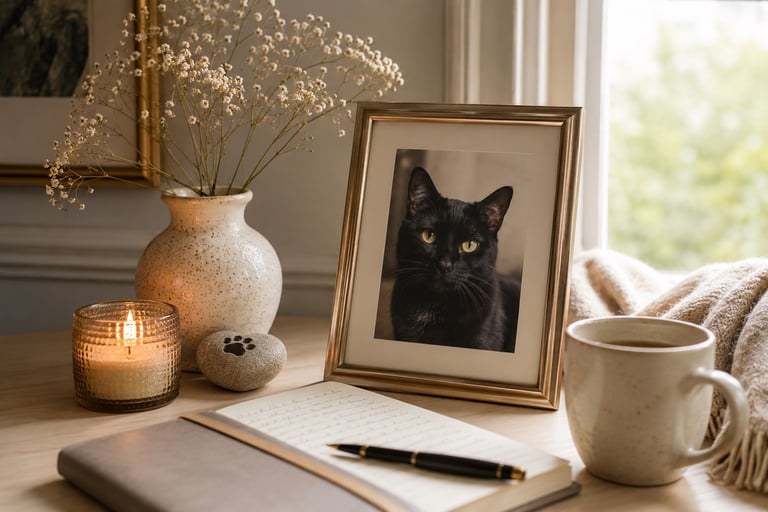
Healing Through Journalling After Pet Loss
The loss of a pet can bring deep grief, loneliness, and emotional pain that is often difficult to express. Journalling can offer a space to process pet loss, hold onto meaningful memories, and move through grief with greater compassion and self-understanding.
HEALING AFTER PET LOSS
5/28/20265 min read


UNDERSTANDING PET LOSS AND GRIEF
The loss of a pet can be one of the most painful experiences a person goes through. For many people, animals are not simply companions — they are part of everyday life, a source of comfort, routine, emotional safety, and unconditional connection. When that bond is suddenly gone, the grief that follows can feel overwhelming.
Yet pet loss is often misunderstood or minimised by others. People grieving the loss of a pet may hear comments such as “you can always get another one” or feel pressure to move on quickly. This lack of recognition can make grief feel isolating and difficult to express openly.
The grief after losing a pet is real. It reflects the depth of the relationship that existed and the important role that animal played in a person’s life. Whether the loss was sudden or expected, peaceful or traumatic, the emotional impact can affect daily functioning, mood, sleep, concentration, and a person’s sense of stability.
For many people, journalling can become a gentle and supportive way to process pet loss grief and make space for emotions that are difficult to speak aloud.
WHY THE LOSS OF A PET CAN FEEL SO INTENSE
The bond between humans and animals is often deeply emotional. Pets are present during ordinary moments of life that slowly become meaningful over time — mornings together, quiet evenings, daily walks, familiar routines, and comforting companionship during periods of stress, loneliness, or grief.
Animals offer connection without judgment or expectation. Their presence can provide emotional grounding and consistency in ways that are difficult to explain to people who have not experienced a close bond with a pet.
When a pet dies, people are not only grieving the animal itself. They may also be grieving the routines built around them, the sense of companionship, the role the pet played in the household, and the emotional support they provided. In some cases, the loss of a pet can also bring up feelings connected to previous grief, loneliness, aging, or major life changes.
Grief does not follow a straight line. Some days may feel manageable, while others may bring waves of sadness, guilt, anger, numbness, or regret. Many people question whether they did enough, whether they made the right medical decisions, or whether they should still be grieving so deeply weeks or months later.
These reactions are common. There is no correct timeline for healing after the loss of a pet.
JOURNALLING AS A WAY TO PROCESS THE LOSS
Journalling can provide a private and supportive space to process emotions after pet loss. Writing allows thoughts and feelings to move out of the mind and onto the page, which can reduce emotional overwhelm and help people better understand their grief.
Unlike conversations with others, journalling does not require explanation, filtering, or reassurance. A journal can hold sadness, anger, confusion, love, guilt, relief, gratitude, or even conflicting emotions all at once.
For some people, writing becomes a way to stay connected to their pet while adjusting to life after the loss. For others, it simply becomes a safe place to release thoughts that feel too heavy to carry internally.
Research around grief and expressive writing suggests that putting emotions into words can support emotional processing, reduce feelings of isolation, and improve psychological wellbeing over time. While journalling does not remove grief, it can help create space for reflection, self-compassion, and gradual healing.
HOW TO START JOURNALLING AFTER THE LOSS OF A PET
There is no right way to journal through grief. Some people write pages at a time, while others write only a few sentences. What matters most is honesty rather than structure or perfection.
A dedicated notebook, journal, or digital document can become a personal space for reflection. Some people prefer writing in silence, while others find comfort sitting near a favourite photo, candle, or memorial item connected to their pet.
In the beginning, it may help to start with simple reflections rather than trying to write something meaningful or polished. Grief often affects concentration and emotional energy, so small moments of writing are enough.
You might begin by writing about:
what you miss most today
a favourite memory
a routine that feels different now
emotions that feel difficult to express aloud
things you wish you could still say to your pet
Even brief writing can help acknowledge grief rather than suppress it.
WRITING ABOUT MEMORIES AND CONNECTION
One of the most healing parts of pet loss journalling can be preserving memories. Writing about everyday moments often becomes more meaningful than trying to summarise an entire relationship.
People may write about the sound of paws approaching down the hallway, a favourite sleeping spot, morning greetings, small habits, or the comfort their pet provided during difficult periods of life.
These memories help maintain connection while also gently reinforcing that the relationship mattered and continues to hold meaning.
Some people choose to write letters to their pet. Others create journal entries addressed directly to them, expressing love, regret, gratitude, or unfinished thoughts. This can be especially helpful when the loss involved euthanasia, sudden illness, or complicated emotions surrounding end-of-life decisions.
WORKING THROUGH DIFFICULT EMOTIONS AFTER PET LOSS
Grief after the loss of a pet can bring emotions that feel uncomfortable or confusing. Guilt is particularly common. People often replay decisions, wonder if they noticed symptoms early enough, or question whether they should have done something differently.
Journalling can help slow down these spiralling thoughts by creating room to explore them more compassionately.
Writing may also uncover emotions such as anger, numbness, resentment, or relief — particularly after long illnesses or caregiving stress. These feelings can be difficult to admit, but they are not unusual. Grief is complex, and emotional reactions rarely fit neatly into one category.
If journalling begins to feel emotionally overwhelming, it is important to pause and return later. Grief work does not need to happen all at once. Some people also benefit from additional support through counselling, pet loss support groups, or trusted conversations with people who understand the significance of animal companionship.
HONOURING YOUR PET'S MEMORY WHILE MOVING THROUGH GRIEF
Healing after pet loss does not mean forgetting. For many people, healing involves learning how to carry the relationship forward in a different way.
Journalling can become part of that process by helping preserve memories, document emotions, and acknowledge the lasting impact a pet had on a person’s life.
Alongside writing, some people find comfort in creating rituals of remembrance, such as assembling photo albums, planting something in their pet’s honour, creating a memory box, or donating to an animal rescue organisation.
These acts do not erase grief, but they can help transform pain into continued connection and meaning.
Over time, grief often changes shape. The intensity may soften, even though the love remains. People frequently find that while the pain of the loss becomes less consuming, the bond with their pet continues to stay present through memories, routines, and emotional connection.
HEALING AFTER THE LOSS
The loss of a pet can leave a profound emotional absence. Grief after pet loss deserves recognition, compassion, and space to be expressed openly rather than minimised or rushed.
Journalling offers one way to process grief gently and honestly. It creates a place where sadness, love, memories, and healing can coexist without pressure or judgment.
There is no perfect way to grieve the loss of a pet, and there is no timeline that determines when someone should feel “better.” Healing happens gradually, often in small and quiet ways.
What remains constant is the significance of the bond itself. The love shared with a pet does not disappear with their absence. It continues to live on in memory, in daily life, and in the lasting emotional imprint they leave behind.